
Phimosis is a common condition where the foreskin of the penis cannot be fully retracted over the head (glans). For some men this causes no problems, but for many it can lead to pain, infections, hygiene issues, and difficulties with sexual activity.
In Ireland, phimosis is one of the most common medical reasons men seek circumcision. This article explains the causes, symptoms, and treatment options — including when circumcision may be recommended.
Table of Contents
What Is Phimosis?
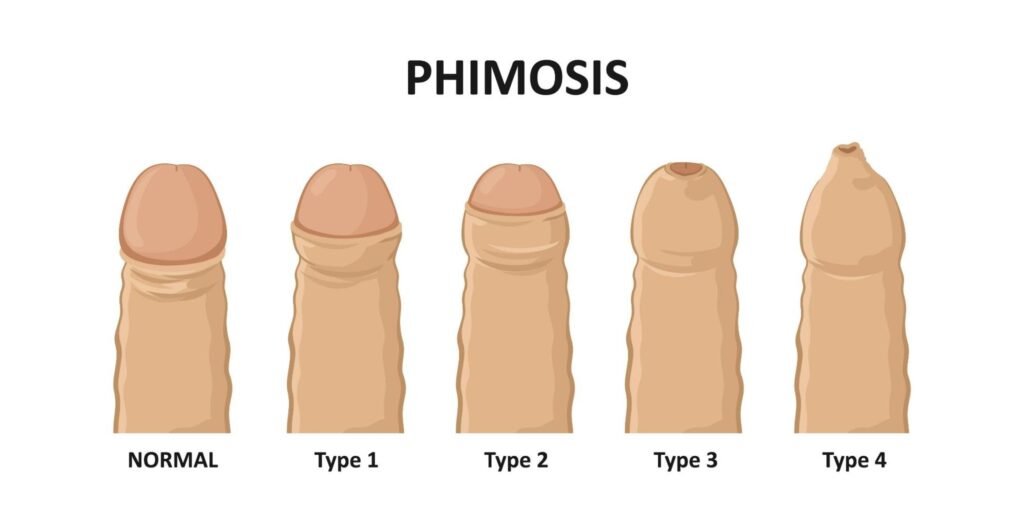
Phimosis (tight foreskin) occurs when the foreskin is too tight to be pulled back over the glans. It is normal in young boys, but in adults it is usually due to scarring or inflammation of the foreskin.
Phimosis can range from mild tightness to complete inability to retract the foreskin.
Causes of Phimosis in Adults
In Ireland, phimosis can occur for different reasons. In adults it is usually an acquired condition, meaning it develops later in life, although some men may have it from birth (congenital phimosis).
Common Causes
- Infections: Repeated infections of the foreskin (balanitis) or glans (balanoposthitis) can cause inflammation and scarring that lead to phimosis.
Skin Conditions: Eczema, psoriasis, lichen planus, and lichen sclerosus can affect the foreskin, making it inflamed, thickened, and scarred.
Injuries: Trauma from rough sexual activity, accidents, or small tears can result in scarring and tightening of the foreskin. A common example is “zipper trauma”, where the foreskin becomes caught in a zipper.
Sexually Transmitted Infections (STIs): Certain STIs can cause inflammation and scarring of the foreskin, increasing the risk of phimosis.
Congenital vs. Acquired Phimosis
Congenital phimosis: Present from birth. The foreskin remains tight or adherent and doesn’t loosen naturally, though the exact cause is often unclear.
Acquired phimosis: Develops later in life, usually as a result of infections, skin conditions, injuries, or scarring.
Other Risk Factors
Poor hygiene: Can contribute to recurrent infections that eventually lead to phimosis.
Diabetes: Men with diabetes are more prone to infections and scarring, making phimosis more likely.
Symptoms of Phimosis
Common symptoms men experience are:
Pain or discomfort when retracting the foreskin
Swelling, redness, or recurrent infections
Cracks or bleeding of the foreskin
Painful erections or intercourse
Difficulty passing urine (spraying, ballooning of the foreskin)
Increased sensitivity or irritation of the glans
If left untreated, phimosis can lead to repeated infections, scarring, and in severe cases, difficulty urinating.
Treatment Options for Phimosis in Ireland
Treatment depends on the severity of the condition and how much it affects daily life.
Non-surgical treatments
Topical steroid creams prescribed by a doctor
Gentle stretching exercises
Improved hygiene routines
These can help in mild cases, but recurrence is common.
Frenuloplasty
For men with a short frenulum (tight cord) contributing to phimosis
A minor procedure to release the tight frenulum without full circumcision
Circumcision
The definitive treatment for phimosis, removing the tight foreskin
At Circumcision Centre Ireland, we use the modern CircCurer stapler method for adults, as well as traditional cut & stitch techniques.
Benefits of stapler circumcision: quick procedure under local anaesthetic, less pain, faster recovery compared to traditional methods
Why Many Men in Ireland Choose Circumcision for Phimosis
Permanent solution (no recurrence of tightness)
Eliminates infections linked to phimosis
Improved hygiene and comfort
Restored confidence in sexual function
Fast access at private clinics (weeks vs years on HSE waiting lists)
Patients from Northern Ireland
We also see many men from Northern Ireland who travel to Dublin for phimosis treatment and circumcision. NHS waiting lists are long, and private hospital costs under general anaesthetic are significantly higher than specialist clinics.
Why Choose Circumcision Centre Ireland?
Specialist clinic
We focus exclusively on circumcision.
New techniques
The only clinic in Ireland offering stapler circumcision for adults.
One-stop service
Consultation and procedure on the same day.
Affordable pricing
From €1,800 all-inclusive, compared with €3,000–€4,600 in hospitals.
Conclusion
Phimosis is a common condition in adult men that can cause pain, infections, and sexual difficulties. While creams and stretching may help temporarily, circumcision is the most reliable long-term solution.
In Ireland, circumcision in a specialist clinic like CCI offers a modern, affordable, and fast treatment option, without the long waits or high hospital costs.
FAQs
What is phimosis?
Phimosis is when the foreskin is too tight to be pulled back over the head of the penis. In adults, it usually results from scarring or inflammation.
What are the symptoms of phimosis?
Symptoms include tight foreskin, pain during sex or erections, infections, cracking and splitting, bleeding, or difficulty urinating.
Can phimosis be treated without circumcision?
Mild cases may respond to steroid creams or stretching, but recurrence is common. Circumcision is the definitive treatment.
How much does circumcision for phimosis cost in Ireland?
Specialist clinics charge €1,700–€1,900. Hospital procedures under GA may exceed €3,000–€4,600.
Is circumcision for phimosis covered by insurance in Ireland?
Sometimes, if medically necessary. Coverage varies by policy Patients should check directly with their insurer.